Yes, a truck without a valid roadworthiness test can be sold through truckoo. You do not have to present it for testing or repair it: verified dealers and exporters factor the test that is due into their bid, and for the transfer the buyer arranges a temporary or export licence plate. The sales contract, payment and collection all run through truckoo.
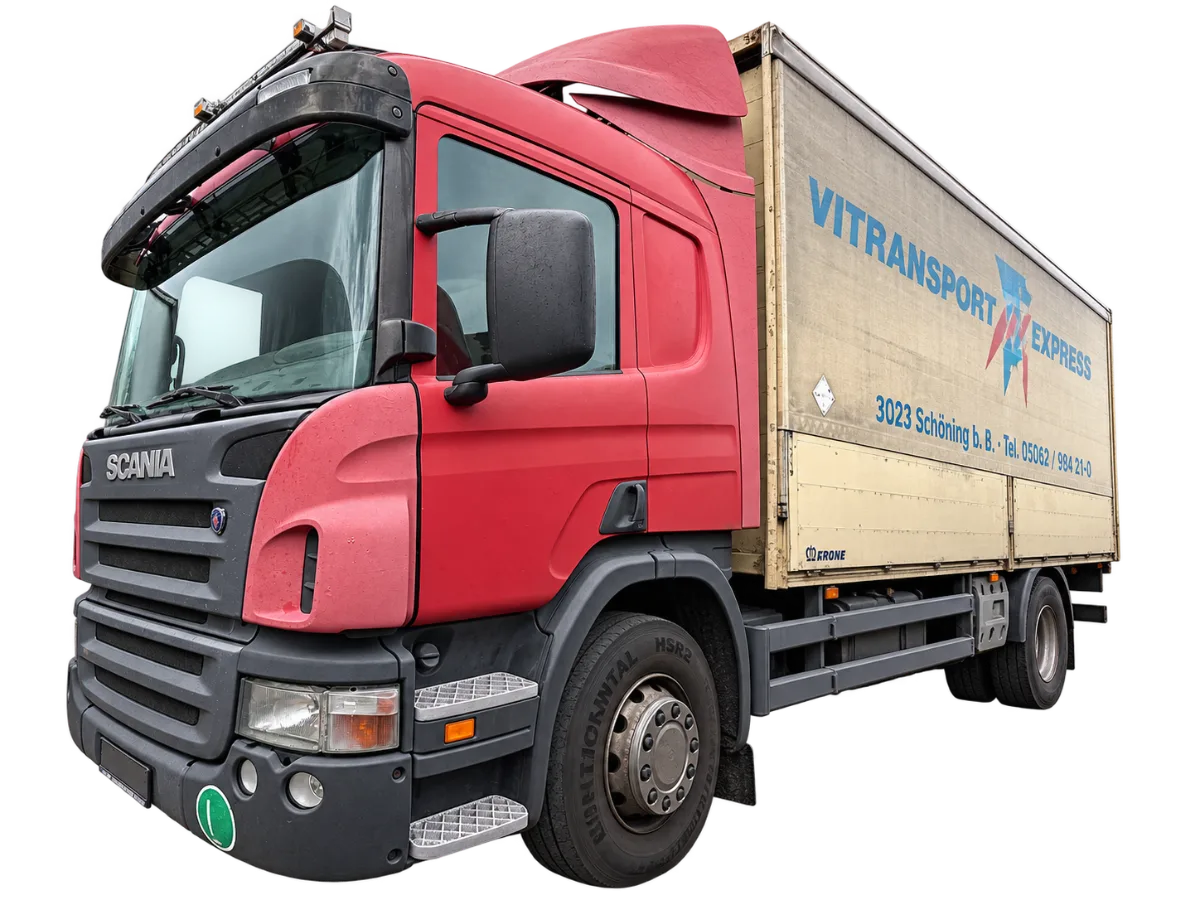
An expired roadworthiness test does not restrict the sale, only driving the vehicle under its own power. The truck is sold like any other; what changes is the route to the buyer and the circle of those who bid.
Honest information matters: a truck that failed its roadworthiness test because of the brakes or a rusty frame is something different from one that simply missed its appointment. Both find buyers – but different ones.
The sale consists of four steps: list, receive bids, accept a bid, hand over. Until you accept a bid you can cancel at any time at no cost – and even after that you pay nothing.
Photograph the registration certificate, enter the mileage, take six mandatory photos. The listing process guides you through each photo. Around ten minutes.
Every bid is binding and valid for a fixed period. You see all bids side by side, not just the highest.
If none suits, you don’t sell – at no cost. Once accepted, there is no renegotiation.
Handover at a partner workshop or collection from your premises. Then payout by instant bank transfer. Deregistration can be added as an optional service (from 49 €).
Special feature without a valid test: the buyer handles collection with a temporary licence plate or by low-loader. You do not have to move the vehicle, not even to a partner workshop – the handover can take place on your own yard.
The deduction for a missing roadworthiness test is smaller than many sellers expect. Dealers calculate with the actual cost of the test and the defects to be expected – not with a blanket risk deduction. What matters, therefore, is why the test is missing.
A missed appointment costs almost nothing. A failed roadworthiness test is assessed on the basis of the defect report: brakes, steering and the frame are expensive, lighting and tyres are not. Enclose the last test report – it replaces speculation with figures.
For exporters the German roadworthiness test is irrelevant. A Euro 3 or Euro 4 truck without a valid test almost always goes abroad anyway; what counts there is the technical condition, not the test certificate. With younger Euro 6 vehicles, the European dealer simply factors the cost of the test in.
Vehicles without a valid test have often been standing for some time. Damage from standing – flat tyres, deeply discharged batteries, seized brakes – costs more than the test itself. A truck that is only standing around sells better today than it will in six months' time.
For trucks over 7.5 t, the German safety inspection is required between roadworthiness tests. If that is missing too, it is not an additional problem for dealers but the same job: they inspect the vehicle completely anyway before it is resold.
A roadworthiness test before the sale costs time and usually money for repairs that the buyer can carry out more cheaply. Dealers have their own workshops and trade prices for parts. What stands between your effort and the bid:
If the repair does pay off in a particular case, the bids will tell you: you can see what the truck fetches in its current condition and can withdraw at any time at no cost.
On truckoo, 1500+ verified dealers and exporters from 35+ countries place bids – among them workshops with their own repair facilities that specifically look for trucks without a valid test, and exporters for whom the German test certificate is irrelevant.
For a dealer with an in-house workshop, a truck without a valid roadworthiness test is a matter of calculation, not a risk. They know the cost of a brake overhaul to the euro and deduct it from the market price. The exporter does not even start calculating: different testing regimes apply in their target markets in Eastern Europe, North Africa and the Middle East, and the vehicle carries on working there as soon as it arrives. You do not need to know which of the two will pay more for your vehicle – both bid on the basis of the same vehicle details.
Yes. The sale is permitted regardless of the roadworthiness test; only taking part in road traffic without a valid test is prohibited. The buyer moves the vehicle on a temporary or export licence plate, or has it loaded.
The buyer arranges the collection – by low-loader or with a temporary licence plate. The effort involved is included in the bid; you do not have to take care of anything. The handover takes place on your own yard or at a partner workshop.
Yes, and it is worth it. A vehicle where only the appointment has been missed is valued differently from one that failed because of a rusty frame. Enclose the last test report – dealers bid higher on facts than on assumptions.
Usually not. Dealers repair more cheaply than you can and factor the test in anyway. Get bids on the vehicle in its current condition; the decision remains free of charge until you accept one.
Yes. Deregistered vehicles are listed through the same process. You need the registration certificate part I and part II and the deregistration certificate; the handover takes place at your premises or at a partner workshop.
Related guides
Ten minutes to enter the details, no presentation for testing, no repairs. For sellers the sale is free of charge – even when you sell.

.svg)